10 May - 20 June 2026
Victoria Calleja - Muriel de Crayencour, Paysages
(For works available, see artists' pages)
“It is the eye that looks; it is the soul that sees.” (Victoria Calleja)
The final exhibition before the summer immerses us in the landscapes of two committed artists who, both geographically and artistically, take us on a journey to explore a particularly diverse range of visual sensations: Victoria Calleja and Muriel de Crayencour. By combining the landscapes of the former with the collages of the latter, we enter a different dimension of landscape representation, one that is more cultural than visual, more profound than purely pictorial.
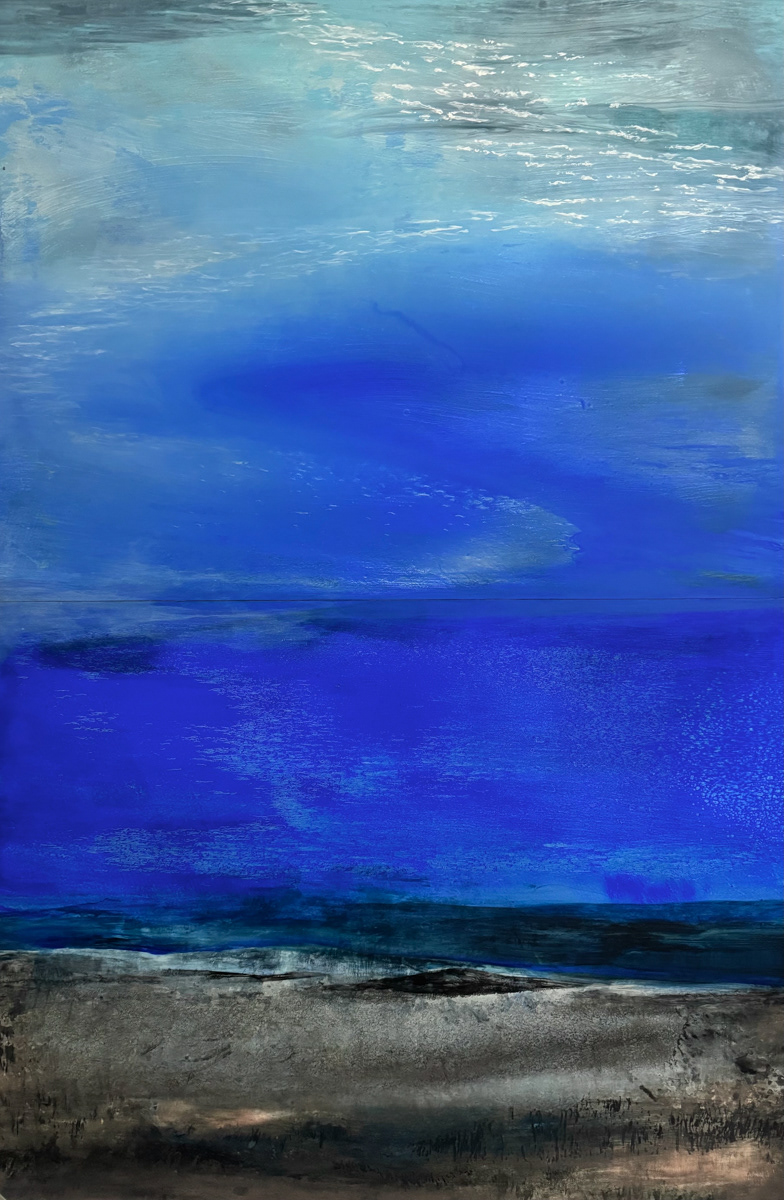
Victoria Calleja, 250121 (2025), acrylic and oil on Dibond, 180 x 120 cm
Victoria Calleja is steeped in the landscapes of her native Chile – those arid, cold landscapes, with the blue colour of the water ever-present. One searches in vain for traces of civilisation or vegetation, only to be confronted with those left by the elements: the winds and tides reign as the great sculptors over these raw and wild landscapes, giving them new forms, a new appearance, like strata of an ever-changing surface of the earth. These formations leave us with a sense of the end of the world, or is it rather a beginning? Although there is an abundance of matter, Victoria Calleja prefers smooth surfaces; she has therefore chosen to paint on aluminium Dibond to paint on, limiting the thickness of paint but forcing the material to blend in.
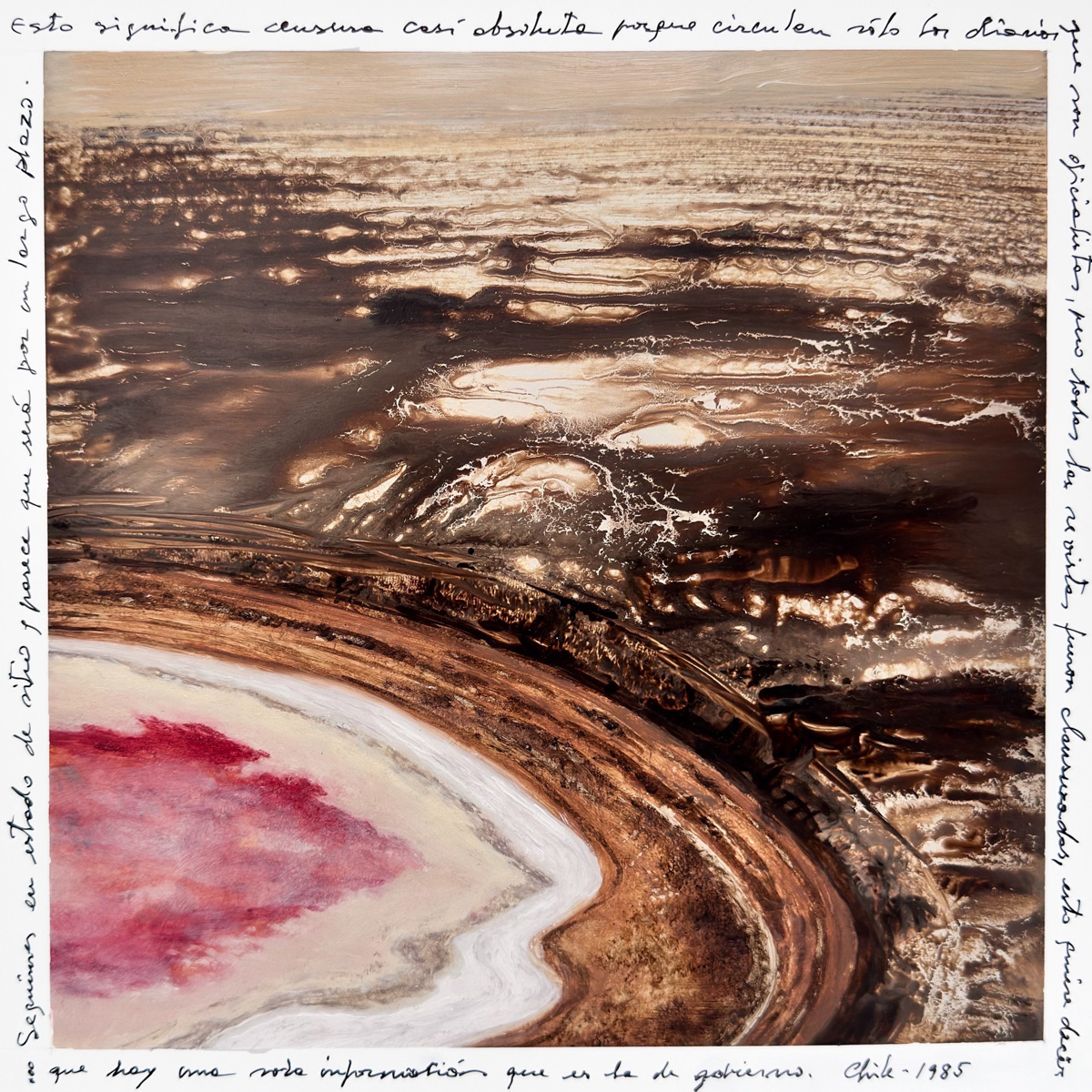
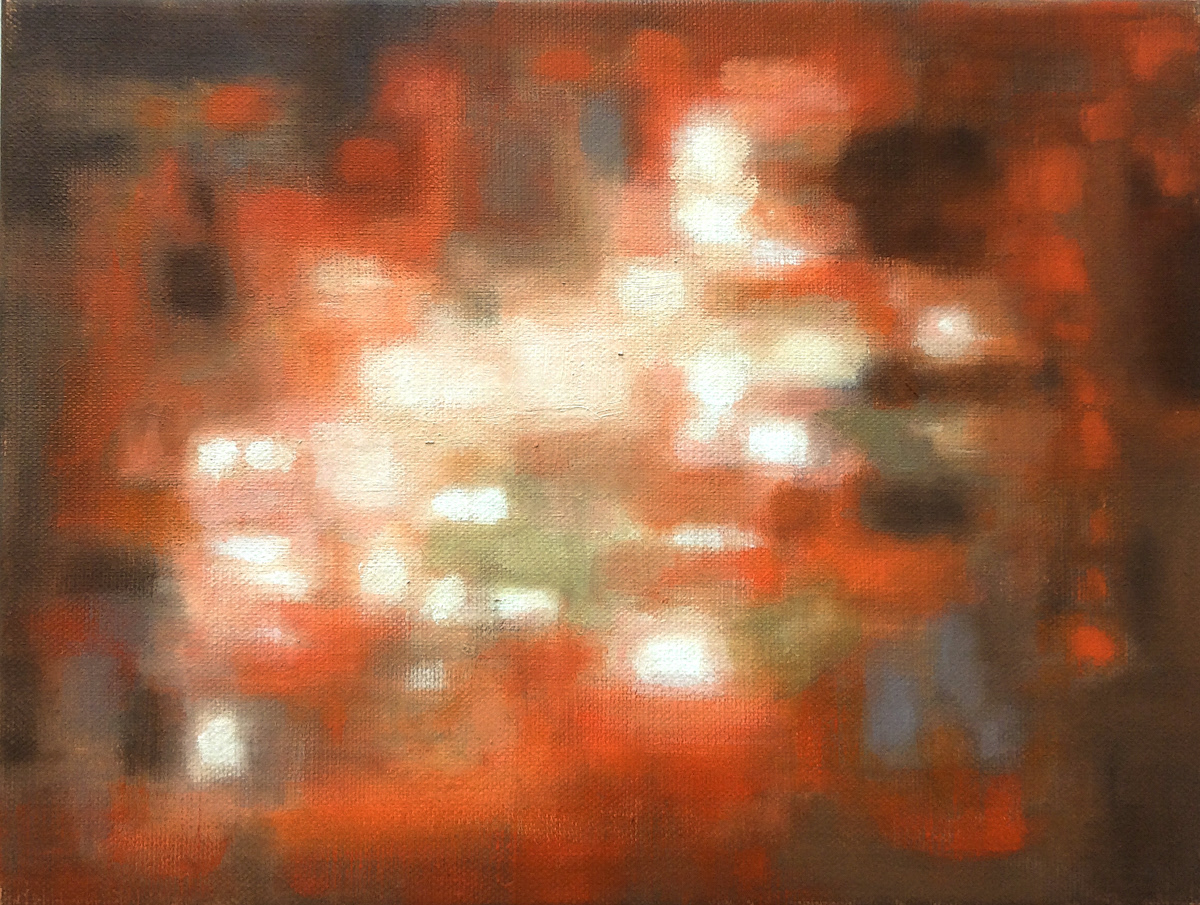
260210 (2026), oil on Dibond, 30 x 30 cm - Abstrait 6 (2016), oil on canvas, 28 x 38 cm
Some landscapes convey messages that are both cultural and historical. Victoria Calleja has chosen to publish letters written by fellow Chileans who, under Pinochet’s dictatorship, were forced to leave the country and who, like her, sought refuge in Belgium. The act of writing adds an element to the landscape, which thus becomes a witness to the history that unfolded in a particular place at a particular moment. And indeed, no landscape is ‘innocent’: every landscape refers to the traces of history and culture that has permeated it over the centuries.
The brightly lit ‘nightscapes’, like abstract reliefs, form a striking contrast and add another, gentler dimension: that of an urbanised civilisation. As 21st-century beings, we can no longer ignore civilisation, even though we sometimes long to be immersed in nature in its purest form.
The brightly lit ‘nightscapes’, like abstract reliefs, form a striking contrast and add another, gentler dimension: that of an urbanised civilisation. As 21st-century beings, we can no longer ignore civilisation, even though we sometimes long to be immersed in nature in its purest form.
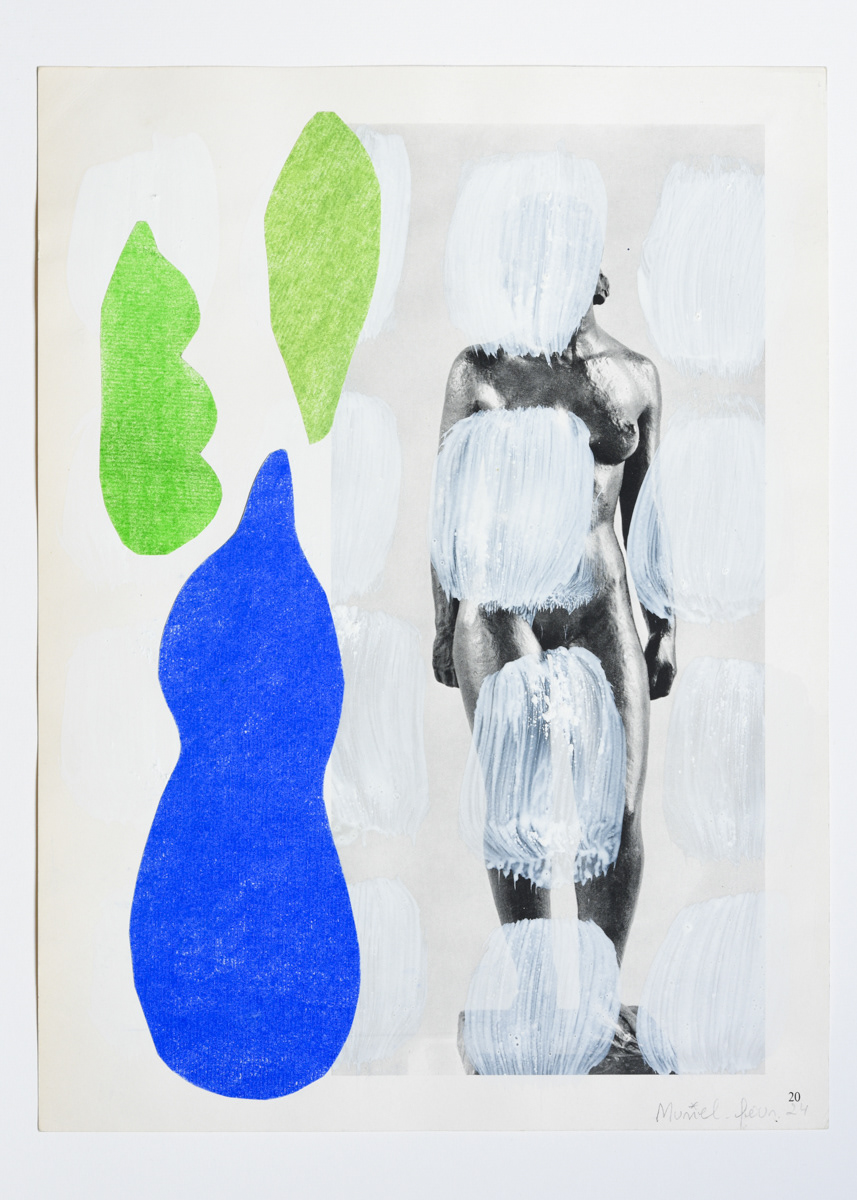
Muriel de Crayencour, Corps et paysage (2024), paint, pastel, collage, 29 x 39 cm
For Muriel de Crayencour, everything is landscape. The Belgian artist, whom we knew primarily for her commitment to women’s issues, has also immersed herself in landscape. During the Covid pandemic, she chose the gentle valleys of northern Tuscany to recharge her batteries and find new creative inspiration far from the urban centres of Brussels and other major cities.
The rural landscape gave her the inner peace necessary for new artistic creation. Observing the light, the colours and the gentle shapes, she eventually created a panorama of idealised landscapes which she broke down into layers, delicately separating them from one another into seven distinct shapes that become the elements of other creations. This is how series of collages came into being. For our exhibition, we have selected a series using old reproductions of female sculptures. These collages show two layers of rounded shapes: the ancient female bodies depicted in the old engravings, enhanced by elements of landscape that become coloured, abstract forms, partially obscuring the depicted sculptures from our view and offering us a new interpretation of a work that combines landscape and the cultural history of places. This playful approach focuses on the rediscovered object, inserting it into a new cycle of contemporary creation; it connects us to history and forges links between the past and the present.
The rural landscape gave her the inner peace necessary for new artistic creation. Observing the light, the colours and the gentle shapes, she eventually created a panorama of idealised landscapes which she broke down into layers, delicately separating them from one another into seven distinct shapes that become the elements of other creations. This is how series of collages came into being. For our exhibition, we have selected a series using old reproductions of female sculptures. These collages show two layers of rounded shapes: the ancient female bodies depicted in the old engravings, enhanced by elements of landscape that become coloured, abstract forms, partially obscuring the depicted sculptures from our view and offering us a new interpretation of a work that combines landscape and the cultural history of places. This playful approach focuses on the rediscovered object, inserting it into a new cycle of contemporary creation; it connects us to history and forges links between the past and the present.
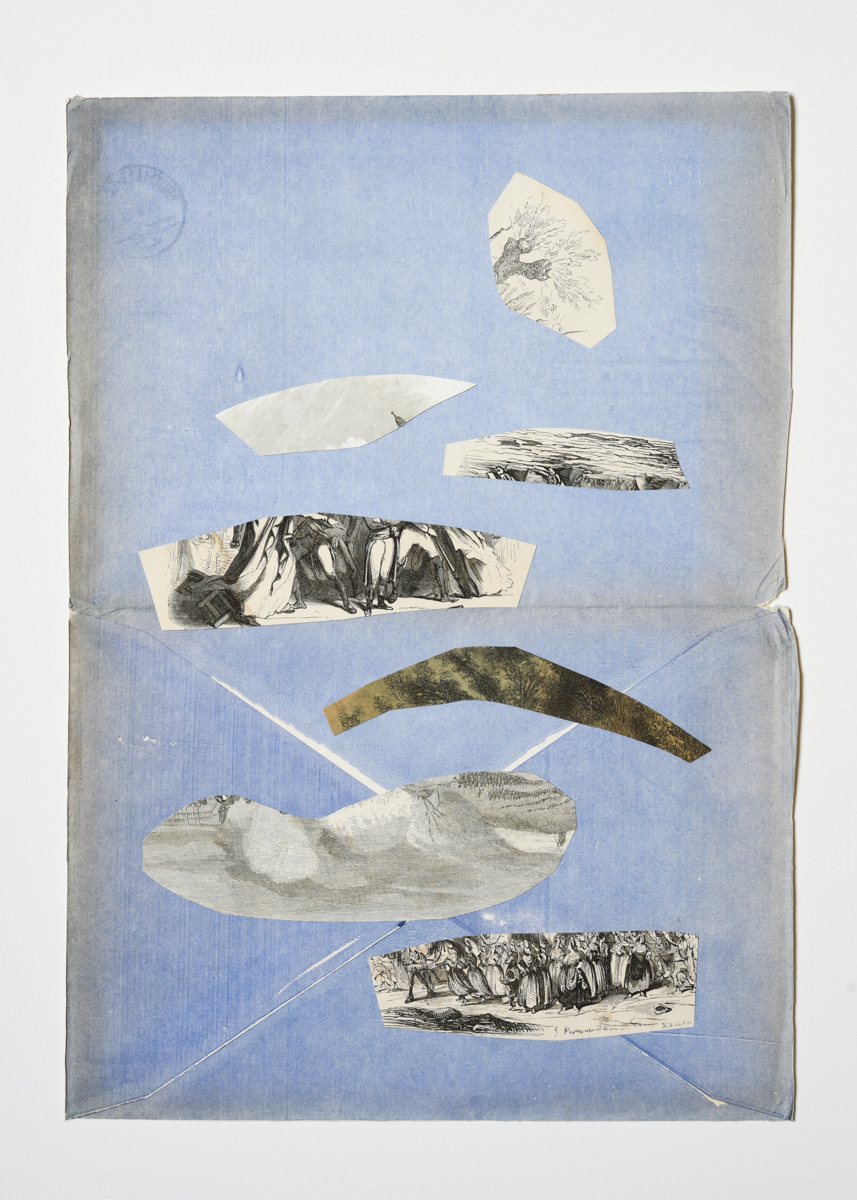
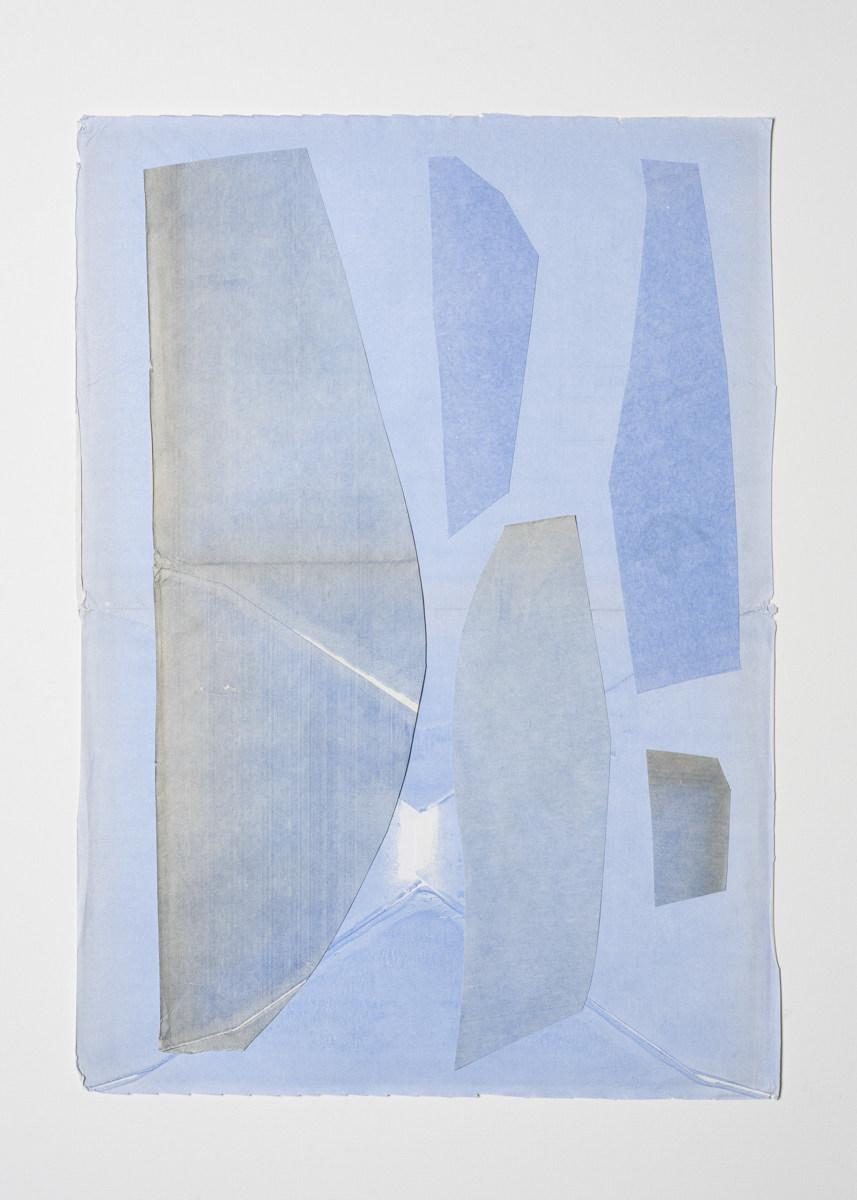
Lettres du paysage X (2026), collage, 32,5 x 23 cm - Lettres du paysage IV (2026), collage, 32,5 x 23 cm
Another highly original interpretation: landscape broken down into glass shapes suspended in cages; these chimes, as soon as a draught sets them in motion, provide us with a unique sound experience. Finally, letters, also broken down, offer us yet another form of traces of how landscape was experienced.
Victoria Calleja was born in Viña del Mar (Chile). Between 2005 and 2023, she taught painting and drawing at the Academy of Watermael-Boitsfort (Brussels). She lives and works in Brussels. Her work has been exhibited in Belgium and Chile. She has received the following awards: 2024 - Gustave Camus Prize, Royal Academy of Sciences, Letters and Fine Arts of Belgium; 1997 - Woluwe-Saint-Pierre Arts Prize, Belgium; 1990 - Alaux-Backes Prize, Belgium; 1989 - Charles Buls Prize, Belgium; 1981 - Grant from the Association of Friends of the Arts, Chile.
Muriel de Crayencour was born in Brussels in 1964, where she lives and works. Trained at the École des Beaux-Arts de Braine-l’Alleud in Philippe Desomberg’s sculpture class, then at the École Nationale Supérieure des Beaux-Arts de Paris in Maurice Calka’s sculpture class, Muriel de Crayencour initially worked as an illustrator and graphic designer. She has published several children’s books with L’École des Loisirs, Mijade and Alice Editions. She has created illustrations for numerous publishers in the United States and Europe. Today, her artistic practice encompasses drawing, sculpture, installation art, and more. She is also a journalist, art critic and founder of the online magazine Mu in the City.