11 January - 28 February 2026
Holger Herschel, Forgotten Future
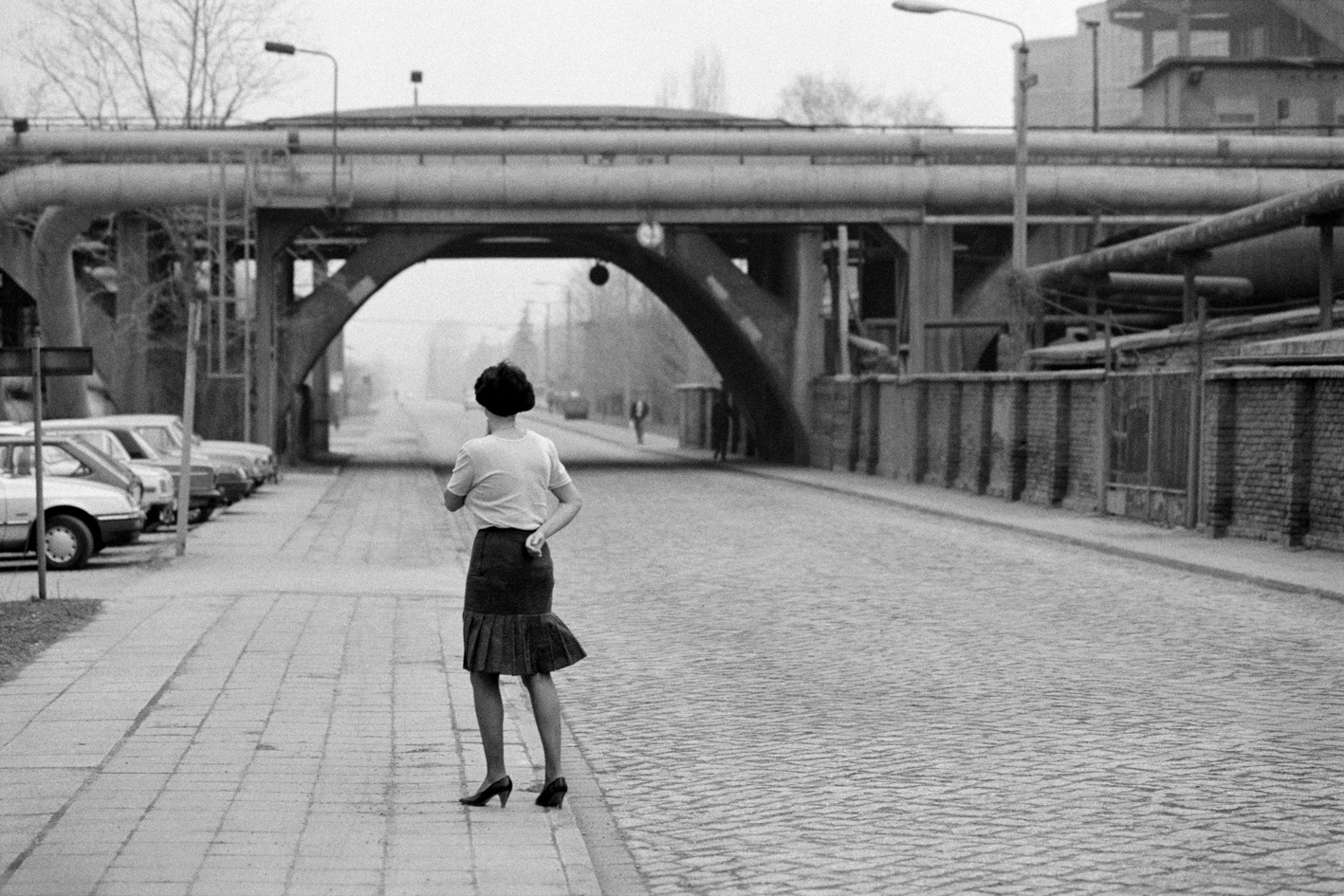
Schwarze Pumpe (1991)
Holger Herschel was born in East Berlin in 1959. He studied sociology at the Humboldt University of Berlin from 1980 to 1985, was a scientific research associate at the Bauakademie (Architecture and Building Academy) of the GDR from 1985 to 1987, then worked as a photo lab technician and photographer at the Maxim Gorki Theatre in Berlin until 1991. Since 1992, he has been working as a freelance photographer, primarily in the fields of monument preservation, architecture, and portrait photography. Many of the documentary photography series he made in the early 1990s focus on the changes in working and living conditions in Eastern Germany after the fall of the Berlin Wall and the German reunification. The book Forgotten Future, published in 2025 by Christoph Links Verlag, presents twelve of these series, together with texts by various authors.
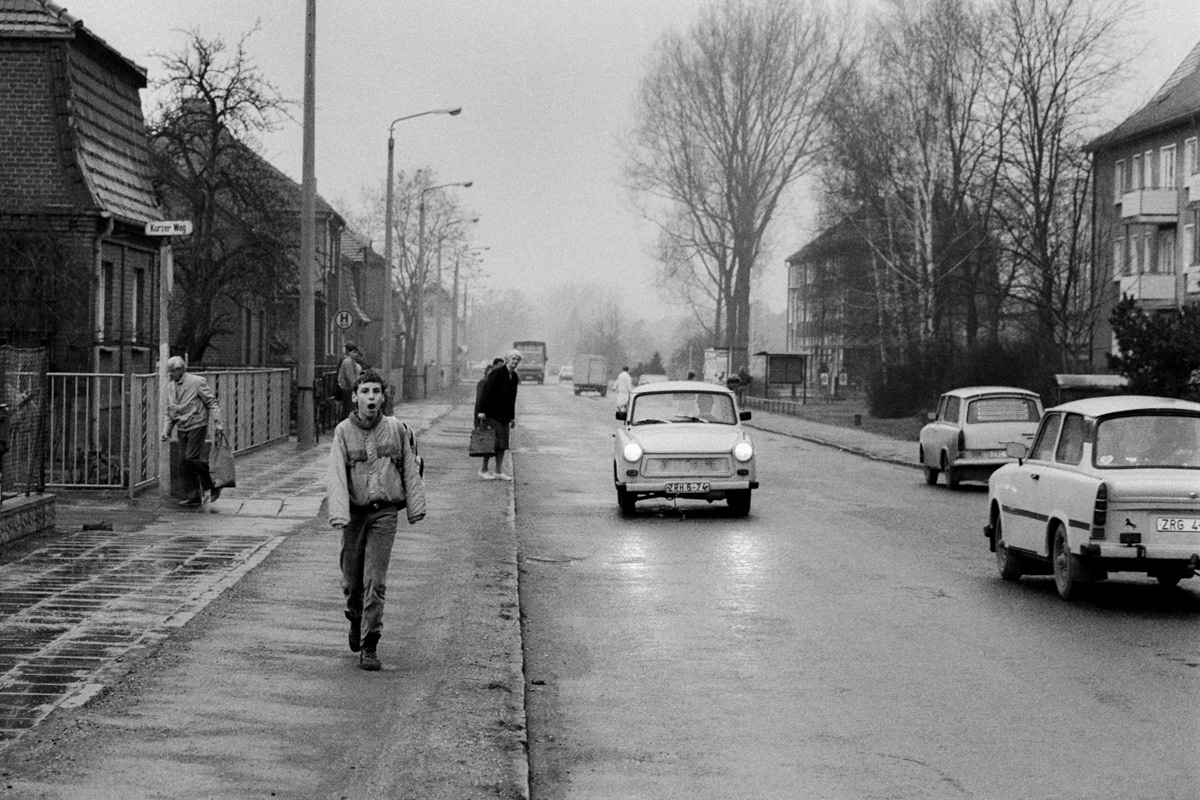
Schwarze Pumpe (1991)
For our exhibition, we have selected two series that primarily address the changes in the world of labour. The series Schwarze Pumpe (Lausitz, Hoyerswerda/Brandenburg) is from 1991. It consists of photographic snapshots of the largest energy combine in the GDR, the lignite open-cast mining and gas power plant in Lausitz, which employed over 70 000 people, for whom a new town was built near Hoyerswerda (Hoyerswerda-Neustadt).In the black-and-white images, we see an industrial landscape in the fog, which casts a grey veil over the operational and residential facilities in the background and over the people. In his essay about this series, Holger Teschke refers to the theatre director Heiner Müller, who, in the play Die Korrektur (The Correction) spoke about the slow transformation towards the socialist human being. For Teschke, after 40 years, i.e. at the time of the regime change, when the recultivation of the landscape began, the transformation towards a new human being with a socialist consciousness had not yet succeeded.
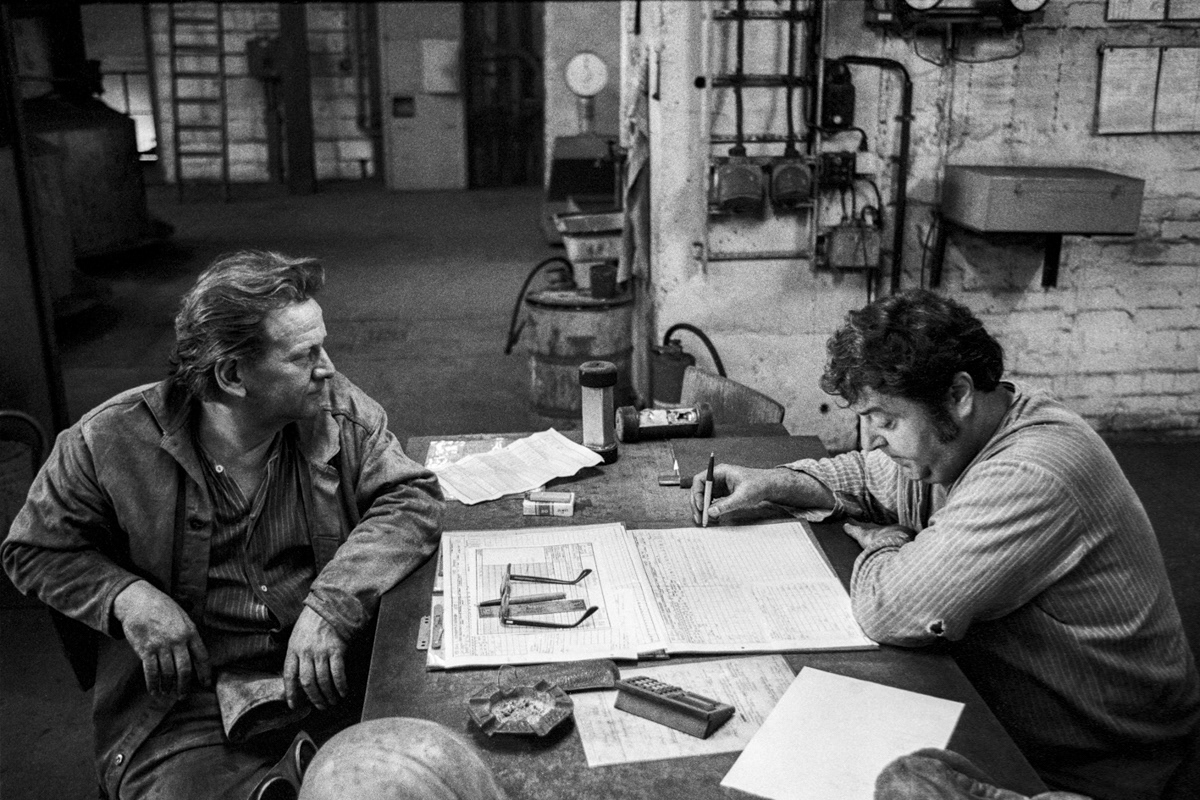
Altes Eisen (VEB GISAG, 1990)
The photographs of the series Altes Eisen (The Scrap Heap) (Leipzig and Chemnitz, Saxony) were taken between 1990 and 1993, in two Saxon foundries, VEB GISAG and Giesserei Rudolf Harlass. Here, the photographer's focus is on the people at their workplace. The photographs give us a virtual tour through the factories, featuring workbenches, vices, and control panels; young workers during their break in the canteen, or a meeting to discuss production plans.
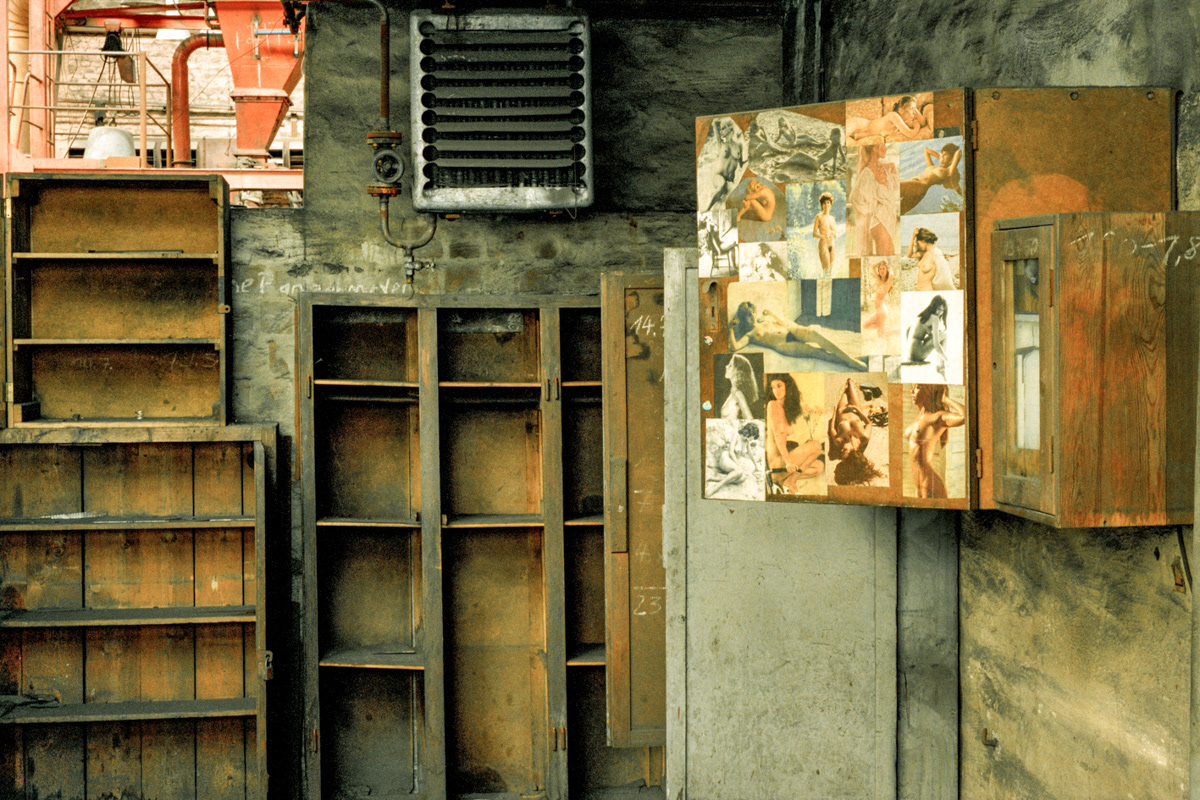
Altes Eisen (Giesserei Rudolf Harlass, 1993)
The colour photographs from the factory in Chemnitz show largely empty production halls. What remains are traces from the active period, as exemplified by the posters of naked women, partly turned yellow, a dismantled truck, cable reels and other abandoned materials. Lockers and cabinets are empty, and the chairs are already tipped onto the tables. An old poster from 1982 advertises the annual May rally with the slogan: 'Everything for the well-being of the people and for peace'.
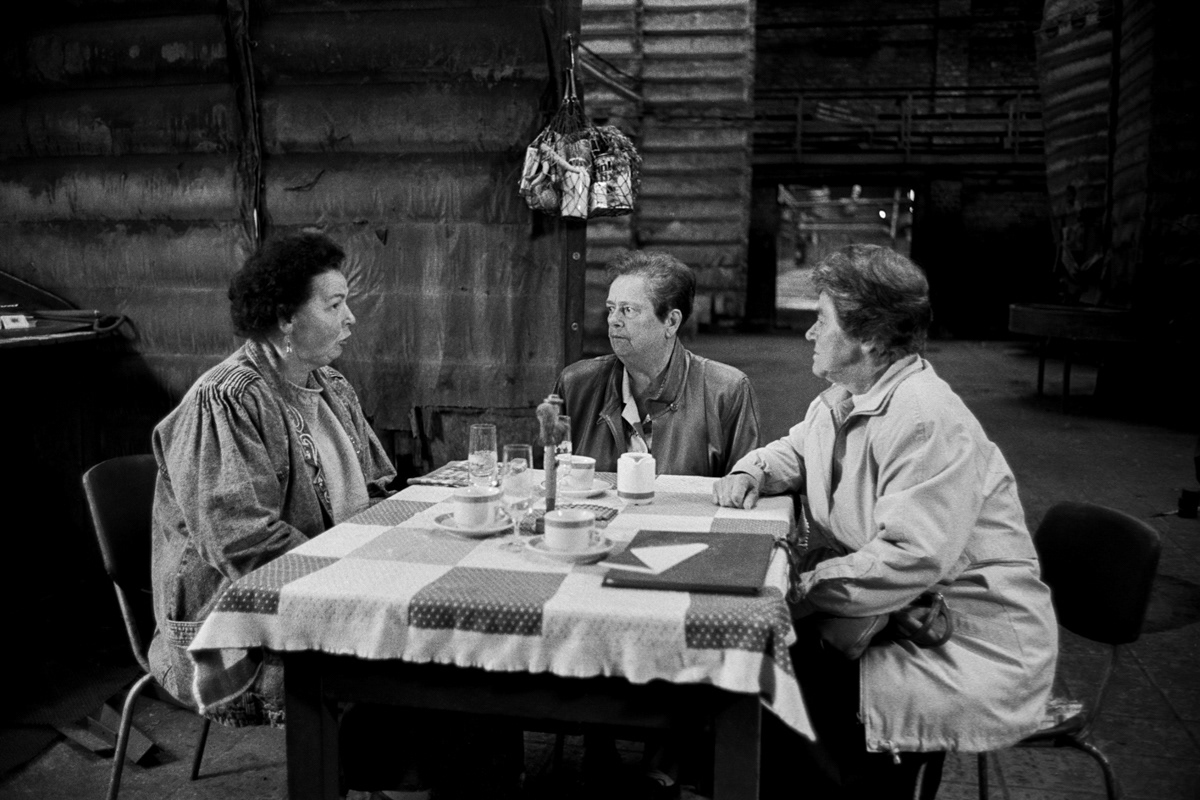
Altes Eisen (Giesserei Rudolf Harlass, 1993)
Today, 35 years later, through the images of the series Schwarze Pumpe and Altes Eisen, we look back into a time capsule. We witness the radical transformation from the socialist planned economy to a market-driven industrial society. For the businesses and the regions concerned, this change always came with downsizing, deindustrialisation, and privatisation, and required great adaptability from the people affected.
Herschel's photography series from the ‘Wende’-era could not be more relevant, as they draw parallels to the current digital and AI revolution, Then and now, change is permanent and there are no certainties. The human being has no choice but to adapt to radical changes – regardless of whether they occur in the economy, politics, or the personal history –, but with a possibility to be actively involved in shaping those changes.
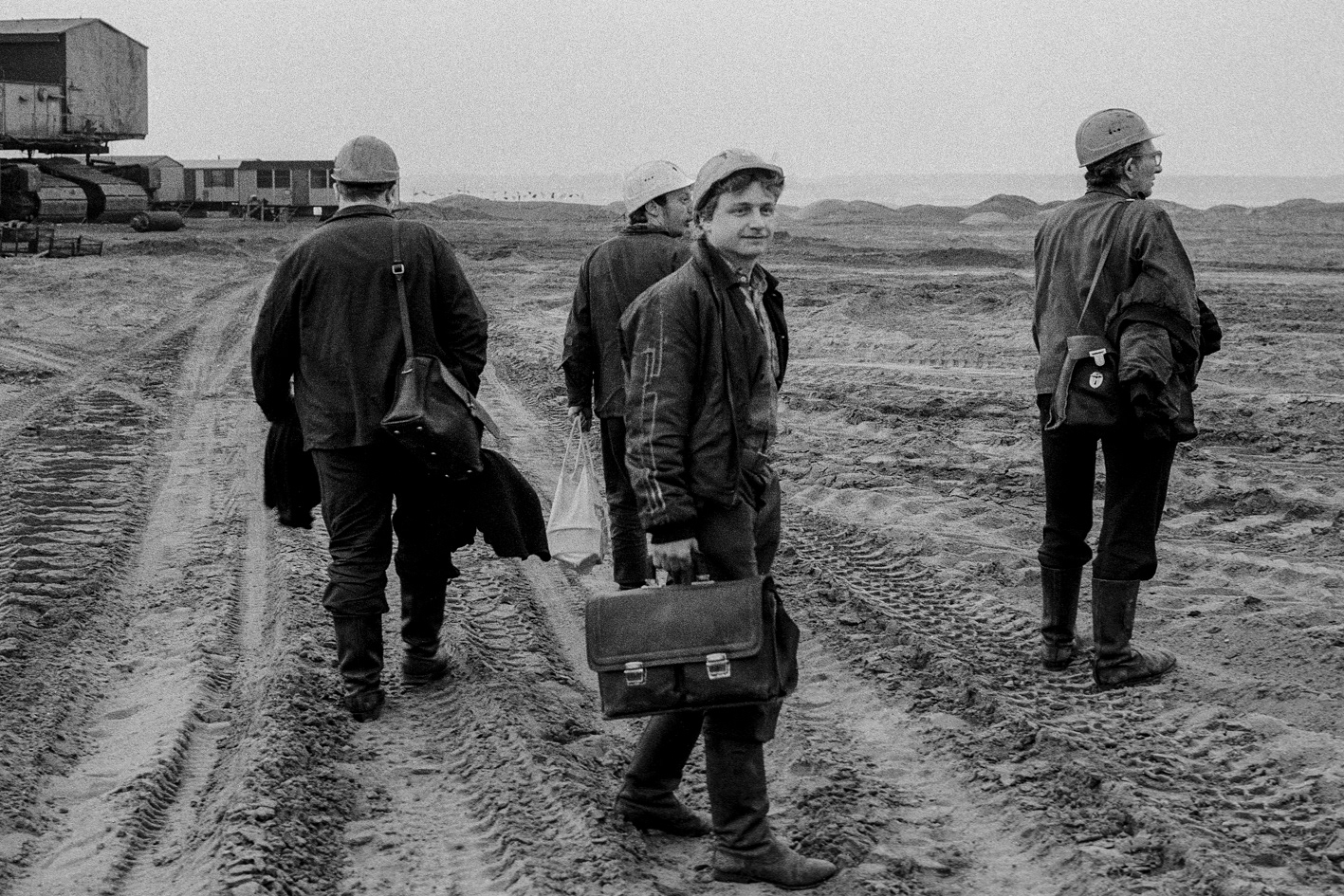
Schwarze Pumpe (1991)
For all works available, please visit this page.